Reading the signs in language
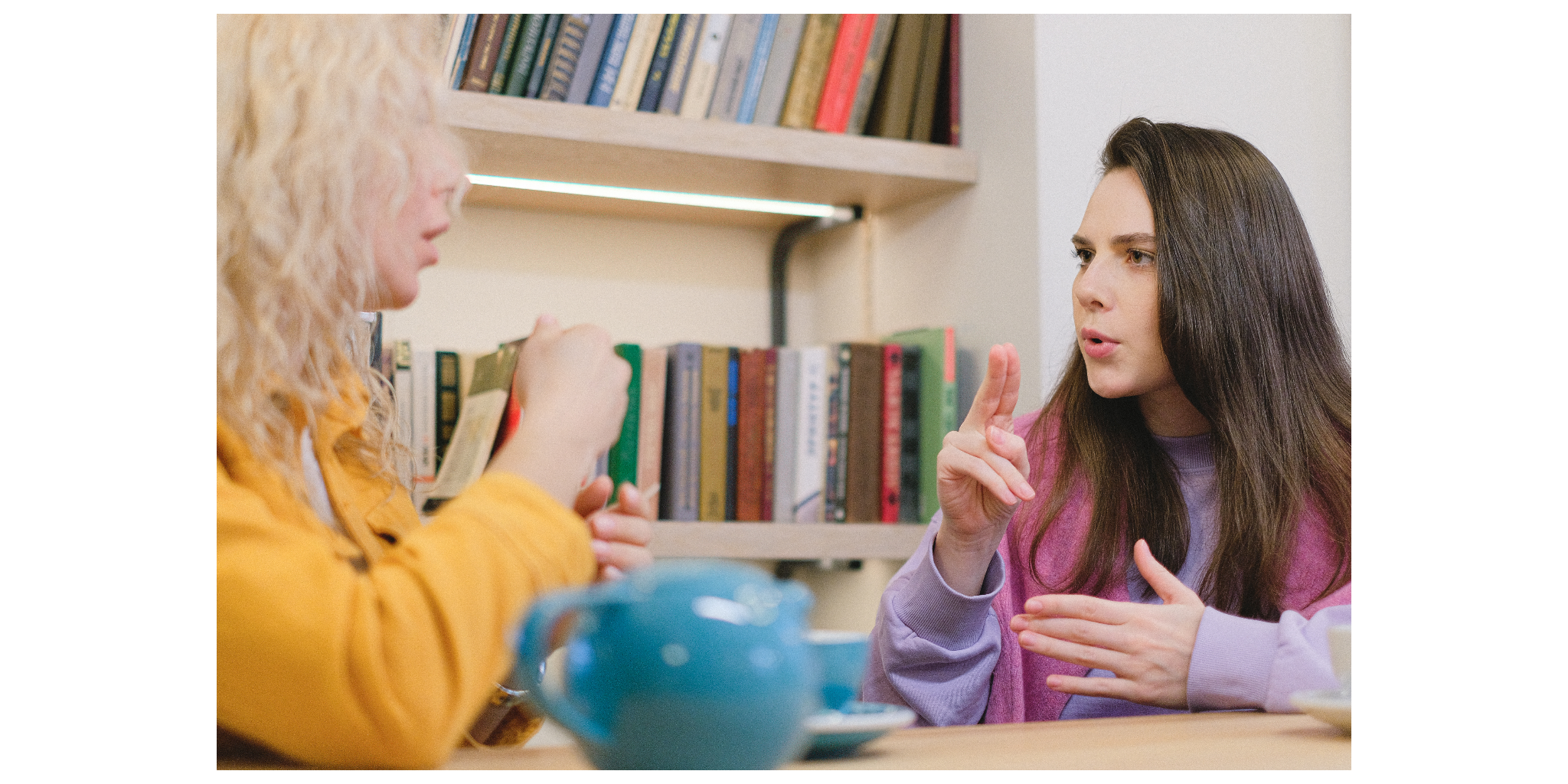
You may be a person, or know someone, who tends to ‘talk with their hands’. Gesturing really helps us deliver and express a message, on top of the actual spoken language that we use. But how do you deliver a message without any sound? For people who experience deafness or with hearing challenges, sign language is the way to go. In fancy scientific words, sign languages use a visual-manual modality to communicate, meaning by sight and by hand. Usually, it’s a combination of articulation and hand motion, but also includes movements of other parts of the body, such as the eyebrows, cheeks, and eyes. As you can imagine, there isn’t a universal or single sign language used world-wide, but many sign languages seem to overlap a lot. In the Netherlands, the Dutch Sign Language (NGT; “Nederlandse Gebarentaal”) has been acknowledged as an official language since 2021(!). Currently, it is estimated that between 15.000 and 60.000 people in the Netherlands use NGT. Fun fact: you would expect that, since the Netherlands and Flanders both speak Dutch, that Flanders would also use NGT, but they have developed their own language. Aside from NGT, people can also apply Signed Dutch (“Nederlands met Gebaren”, NmG); this is spoken Dutch, but supported with hand movements. People who tend to use NmG more are people who experience deafness at a later age, as they were exposed to spoken language before deafness.
The perisylvian playground
A systematic review from 2025 provides a beautiful overview of how nonverbal communication is processed in deaf individuals (Mo et al., 2025). To highlight some findings from this review, research shows that both sign and spoken language have a shared left-sided network in brain imaging studies, called the perisylvian network. This network includes regions such as the inferior & ventral frontal gyrus, the premotor cortex, and the upper & superior temporal gyrus (Scott et al., 2014). Interestingly, speechreading (or lip reading) shows activation in areas that are involved in auditory processing in deaf people, even though there is no sound to be heard. Apparently, your visual and auditory perception isn’t that far away from each other in your brain!
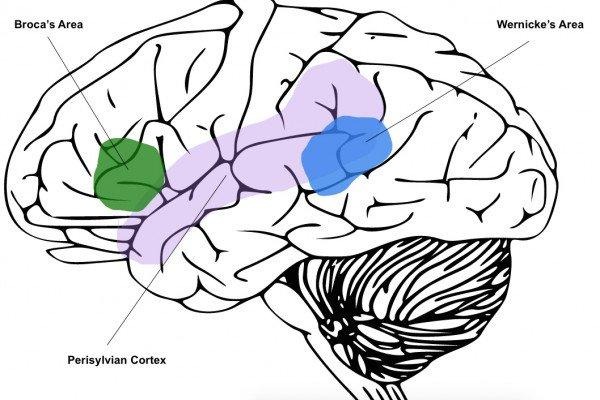
Image 1. Perisylvian network (source: thenakedscientist)
In terms of brain organization, you can imagine that the brains of deaf people (especially if they are deaf since birth) have a different organization compared to hearing people, as they rely more on visual information and, naturally, not on auditory information. People with deafness have better visual abilities and ‘peripheral’ attention, meaning you are more aware of visual input on the outskirts of your visual field. Moreover, they are more sensitive to motion, and have a faster visual response. This even continues after people get hearing aid, such as a cochlear implant!
When people lose their hearing later in life, the phenomenon of cross-modal plasticity can occur due to less auditory input (Kral & Sharma, 2023). Here, an intact sensory system, such as vision or touch, is able to recruit the activation of more cortical regions that are involved with another sensory system, in this case auditory, to support the sensory processing. For example, when deaf individuals who lost their hearing later in life get exposed to non-auditory input (e.g. visual), their auditory cortex is still activated for sensory processing.
Reading between the signs
How can you learn to read if you’ve never heard how words are spoken? These weird symbols on paper or screens that translate to a sensory medium you may have never experienced (or not being able to experience anymore)? Let alone associate it with sign language sequences? Scientists call this learning a language via print, or learning a language by reading, and children with deafness are very good at this, even when they are not fluent in spoken language. Even though children who are born with deafness, and have therefore never heard spoken language, are able to learn how to read. A really nice paper dove into children who are learning a language via print (Caldwell-Harris & Hoffmeister, 2022). The authors first explained how language via print can actually be quite difficult, since human languages didn’t evolve to be learned via print but verbally (or “naturalistic” as the authors say). We have this innate instinct to communicate with our caregivers and join social interactions, which happens primarily through speech, not on paper.
The authors, among deaf educators, emphasize the importance of teaching both spoken, signed and written language to deaf children, which can be as simple as words in picture books, subtitles, or even conversations via text on your phone. Moreover, they consider early exposure to sign language to be crucial for typical child development. At school, there is no official curriculum for learning language via print. Teachers, but also parents, may put sticky-notes with the accompanying word on an object. However, it’s super complex to learn a language like this, as most written words have to be translated word for word. If you know American Sign Language (ASL) for example, learning English print is like learning a new language. Can you imagine learning two languages for… the same language?
Learning a second language seems to be incredibly beneficial, albeit learning Spanish, Mandarin, or English print, regardless of how much you’re able to hear. Let this be a reminder that being able to read books, subtitles, and this article should not be taken for granted. Because as the authors say: “Without words being grounded in human activities, words remain disembodied marks on paper”, and I couldn’t agree more.
Getting handy: baby sign
In the last 15 years, another interesting use of sign language has popped up: baby sign language. Parents and daycares use this in early childhood before a child is able to speak in sentences (0-2y). Here, infants and caregivers use simple gestures to communicate things like hunger, thirst, play, cuddles, etc. A systematic review studied the impact of gestures in development in hearing infants in the first three years of life (Fitzpatrick et al., 2014). It’s hypothesized that using gestures with your tiny baby hands can evoke more positive responses from your parents, and helps to improve communication with your parents. According to the internet, it can help you understand your infants needs better, reduce tantrums and tears, better language development, and enhanced cognitive development (source: https://babysigns.com/). However, the systematic review by Fitzpatrick & colleagues emphasizes being a bit more careful regarding these claims, as the evidence has not been that convincing. Even so, from the studies included in this review - around 16 - results are inconsistent and studies are lacking. Where one study will find better language outcomes for ‘baby sign intervention’ in children (up to 3 years in age) compared to no intervention (Goodwyn et al., 2000) and a link between sign language and intelligence, other research will find no effect. This is also the case for outcomes around the interaction between parents/caregivers and the child - one claims more joint attention and better responsiveness, and others will not share these results. The study methods tend to be more vague and not standardized, but at least there is no negative effect of baby sign language on aspects of development.
Signing off
So, what have we learned? Sign language isn't just spoken language with your voice on mute — it's got its own grammar, rewires how your brain processes the world, and even babies who can barely hold a spoon are apparently fluent enough to demand more cuddles. From perisylvian networks to sticky-notes on the fridge, it turns out communication was never really about sound in the first place: it was about getting the message across, one way or another. So next time someone tells you to "talk with your hands" a little less, kindly inform them that hands have been doing the talking since long before anyone opened their mouth.
Author: Lotte Smit
References
Caldwell-Harris, C. L., & Hoffmeister, R. J. (2022). Learning a second language via print: On the logical necessity of a fluent first language. Frontiers in Communication, 7, 900399. https://doi.org/10.3389/FCOMM.2022.900399/TEXT
Fitzpatrick, E. M., Thibert, J., Grandpierre, V., & Johnston, J. C. (2014). How HANDy are baby signs? A systematic review of the impact of gestural communication on typically developing, hearing infants under the age of 36 months. First Language, 34(6), 486–509. https://doi.org/10.1177/0142723714562864
Goodwyn, S. W., Acredolo, L. P., & Brown, C. A. (2000). Impact of symbolic gesturing on early language development. Journal of Nonverbal Behavior, 24(2), 81–103. https://doi.org/10.1023/A:1006653828895/METRICS
Kral, A., & Sharma, A. (2023). Crossmodal plasticity in hearing loss. Trends in Neurosciences, 46(5), 377–393. https://doi.org/10.1016/J.TINS.2023.02.004
Mo, S., Dimitrijevic, A., & Alain, C. (2025). Nonverbal Communication Processing in Deaf Adults: An Activation Likelihood Estimation Meta-Analysis. Brain Sciences, 15(12). https://doi.org/10.3390/BRAINSCI15121299
Scott, G. D., Karns, C. M., Dow, M. W., Stevens, C., & Neville, H. J. (2014). Enhanced peripheral visual processing in congenitally deaf humans is supported by multiple brain regions, including primary auditory cortex. Frontiers in Human Neuroscience, 8(MAR), 81213. https://doi.org/10.3389/FNHUM.2014.00177/TEXT