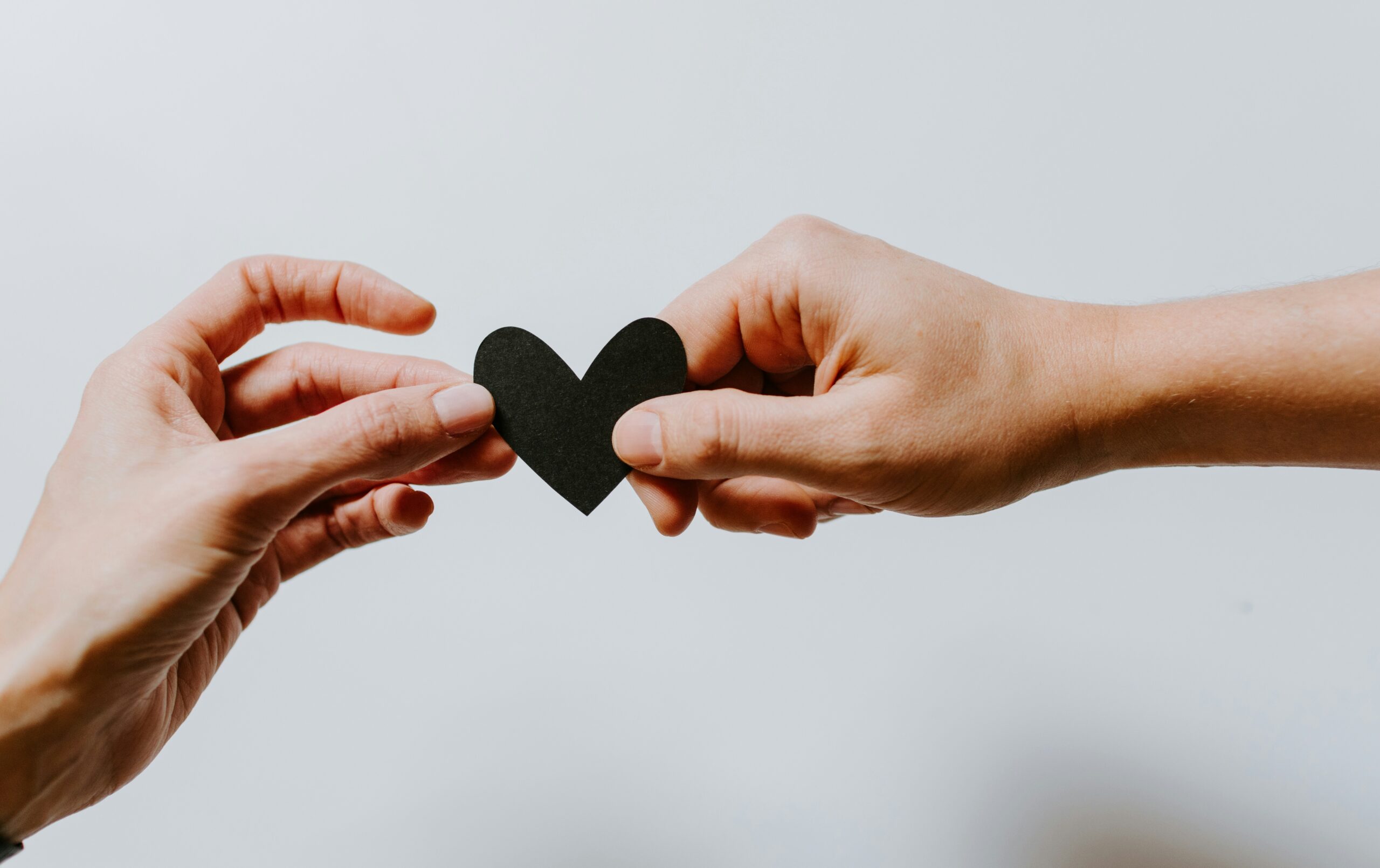
Self-help books and self-improvement podcasts are flying off the shelves these days. Everyone wants to know how to pursue happiness by becoming the best version of themselves: Meditate. Exercise. Eat healthy. Set boundaries. Work on yourself. The message is the same over and over again: you can (and should) find happiness within yourself. But is that really the case?
A recent study examined how being kind to yourself and others relates to well-being. Participants were divided into two groups: Group 1 was instructed to regularly perform “acts of kindness” for other people, such as bringing a coffee for a coworker or sending someone a card. Group 2 was instructed to perform acts of kindness for themselves, such as cooking their favorite meal. After two weeks, both groups experienced a reduction in feelings of depression. In addition, the group that performed acts of kindness for others reported feeling more connected to others; that sense of connection, in turn, was associated with less loneliness and anxiety. In short, being kind to both yourself and others seems to contribute to a better state of mind. Kindness toward others also appears to have an additional effect: it can strengthen our feeling of connection with others, which brings along additional benefits.
The “Harvard Study of Adult Development” underscores the vital importance of connection with others for well-being. This study has been tracking participants for more than 80(!) years, examining their mental and physical health. One of the most striking conclusions is that the participants’ health and happiness are strongly linked to the quality of their relationships. Studies of the famous “blue zones” (places around the world where people live to an above-average age in good health) also show that strong relationships and active participation in society are linked not only to better mental health, but also to better physical health and a longer life.
But why does connection with others have such a major impact on our well-being? Perhaps to answer this, we need to look not only to current research in psychology, but much further back: to human evolutionary history.
From an evolutionary perspective, there are several explanations for our tendency to be kind and helpful. One explanation is kin selection: it is advantageous to help relatives because they share some of the same genes as you. By helping family members, those shared genes can be indirectly passed on. In addition to helping family, it was also advantageous for our ancestors to cooperate with people in their community. For example, while hunting, or when they needed to defend themselves together. When cooperation benefits both parties, we call it mutualism. This may explain why, in addition to our own family, we are also kind to our friends, coworkers, or classmates. A third explanation is reciprocal altruism: we are kind to others because we expect to receive kindness or a favor from them in return in the future. The final evolutionary explanation is competitive altruism. Kindness confers a certain status - we often think highly of people who perform heroic acts or are generous.
In today’s society, we are much less dependent on the people around us for our survival. These days, in theory, you could easily get by for a week without seeing a single person (except perhaps the delivery person). But studies also show that more and more people feel lonely. Our society is changing rapidly, but our social needs seem to have a hard time catching up to this individualistic society. Perhaps the quest for happiness therefore lies not only in the question “How can I take better care of myself?” but rather in “What can I do for others?”
Author: Pauline van Gils
References:
Aliberti, S. M., & Capunzo, M. (2025). The power of environment: A comprehensive review of the exposome’s role in healthy aging, longevity, and preventive medicine—lessons from blue zones and cilento. Nutrients, 17(4), 722.
Curry, O. S., Rowland, L. A., Van Lissa, C. J., Zlotowitz, S., McAlaney, J., & Whitehouse, H. (2018). Happy to help? A systematic review and meta-analysis of the effects of performing acts of kindness on the well-being of the actor. Journal of Experimental Social Psychology, 76, 320-329.
Kreouzi, M., Theodorakis, N., & Constantinou, C. (2024). Lessons learned from blue zones, lifestyle medicine pillars and beyond: an update on the contributions of behavior and genetics to wellbeing and longevity. American Journal of Lifestyle Medicine, 18(6), 750-765.
Naclerio, M., Lazar, L., Hornstein, E. A., & Eisenberger, N. I. (2025). Exploring the effects of prosocial and self-kindness interventions on mental health outcomes. Emotion.
Oe, H., Weeks, K., & Sartamorn, S. (2025). Community-based approaches to healthy aging: Lessons from Japanese blue zones. Health Economics and Management Review, 6(2), 95-107.
ten Have, M., Tuithof, M., van Dorsselaer, S., Schouten, F., Luik, A. I., & de Graaf, R. (2023). Prevalence and trends of common mental disorders from 2007-2009 to 2019-2022: results from the Netherlands Mental Health Survey and Incidence Studies (NEMESIS), including comparison of prevalence rates before vs. during the COVID-19 pandemic. World Psychiatry, 22(2), 275–285. https://doi.org/10.1002/WPS.21087
Twenge, J. M., Haidt, J., Blake, A. B., McAllister, C., Lemon, H., & Le Roy, A. (2021). Worldwide increases in adolescent loneliness. Journal of Adolescence, 93, 257–269. https://doi.org/10.1016/J.ADOLESCENCE.2021.06.006
Waldinger, R., & Schulz, M. (2023). The good life: Lessons from the world's longest scientific study of happiness. Simon and Schuster