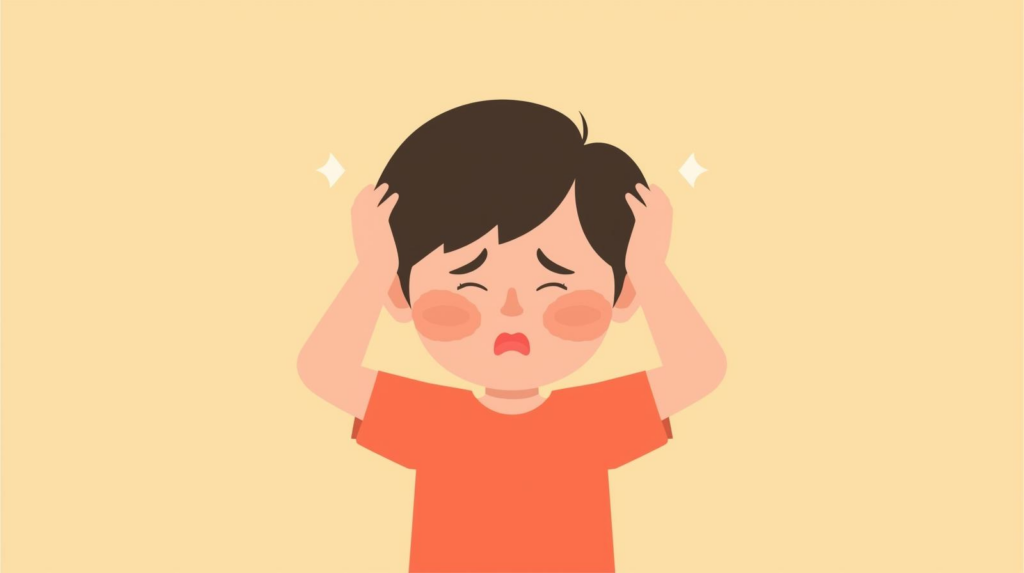
There is no actual sound produced in the environment, yet you hear a ringing, radio static, high-pitched tone or the ringing sounds of railway crossing bells. Welcome to the world of someone living with tinnitus.
The term tinnitus originates from the Latin tinnitus aurium: “the ringing of the ears”. It is estimated that 13% of people experience tinnitus – roughly 1 in 8. Despite how common tinnitus is, it is not fully understood. Together, we will walk through several aspects of tinnitus. After reading this text, you will know more about the impact of tinnitus and its (possible) development. We also discuss tips for people who experience tinnitus and ways to prevent tinnitus as effectively as possible!
The impact of tinnitus
In the Netherlands, about two million people experience tinnitus. The number of people visiting their general practitioner with complaints of tinnitus is increasing, particularly among those aged 20 to 44. The exact reason behind this is not entirely clear: researchers think it may be due to greater exposure to loud sounds during concerts and nightlife for example. Plus, the increased use of mobile phones and speakers play a role. In addition, tinnitus is discussed more frequently in social media nowadays, which is why people experiencing complaints may seek for medical help sooner.
How does tinnitus work?
But what do we mean exactly when we talk about tinnitus? Tinnitus can be roughly divided into two types: objective tinnitus and subjective tinnitus. Objective tinnitus is far less common than subjective tinnitus.
In objective tinnitus, the sound can be heard by the person experiencing it and can also be detected by someone else. This often requires a tool such as the doctor’s stethoscope or specialized recording equipment, though sometimes the sound is hearable without such tools! One possible cause of objective tinnitus is abnormal development of the blood vessels near the auditory organ. The blood comes across irregularities on its way, creating a flowing sound. Compare this to a car smoothly driving on a highway versus a car rattling over country roads.
Subjective tinnitus is different: the sound is heard only by the person experiencing it and cannot by detected by someone else (with or without tools). Sometimes, there is an explanation for subjective tinnitus. For example, when the auditory nerve is irritated – such as during inflammation – the brain may interpret this irritation as sound, often a high-pitched tone . That sound is experienced without actual sound being produced in the environment.
However, in many cases, the precise cause of experiencing a tinnitus sound is unknown. What happens in the body to generate this tinnitus sound is largely unclear to researchers and doctors. Let us take a look at what the current scientific understanding is.
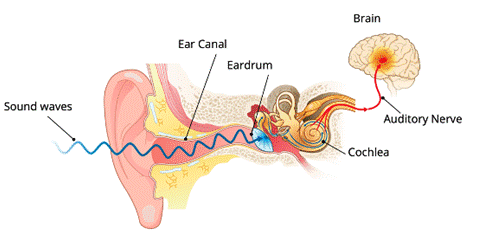
Source: https://stilltinnitus.com/what-is-tinnitus-should-you-be-worried/
The auditory nerve runs from the cochlea in the inner ear to the brain to submit perceived sound. Each tiny part of the cochlea detects a specific pitch and sends it via its own nerve fibers to its own region in the brain. Researchers believe that damage to tiny parts of the cochlea is often the starting point of tinnitus. This damage can be a result from exposure to loud sounds. The current central explanation for generation of a tinnitus sound is that the brain attempts to compensate this damage. Several ideas exist for how this compensation process might lead to tinnitus:
Loss of inhibition
Under normal circumstances, nerve fibers balance one another. If one fiber transmits too much sound to the brain, neighboring fibers help to suppress it. If a tiny part of the cochlea and its own nerve fiber are damaged, this damaged region can no longer inhibit its neighboring fibers. As a result, these neighboring fibers may transmit more sound, which is perceived as tinnitus sound.
Imagine this as a street full of houses where parties occasionally take place (with proper hearing protection, of course). Normally, if the music is too loud, you would ask your neighbors to turn it down. Bur if you are not home the neighbors may play louder music because there is no one to "inhibit" them!
Turning up the volume
If a damaged tiny part of the cochlea can no longer perceive sound, the brain may attempt to compensate for this by making all fibers more sensitive to sound. This increased sensitivity amplifies signals from undamaged fibers, potentially generating a tinnitus sound.
Returning to the neighbors analogy: in your house, there is no music to be heard at all. The neighbors would think “This is too silent; we miss the sound of your house!” and decide to install ultra-sensitive sound meters to detect even the faintest tune. The neighbors can even hear your soft humming now, but all other sounds are amplified as well. There is always something to be heard.
Neighboring fibers creating extra noise
Normally, sound signals are transmitted to the brain only once a certain “minimum volume” is exceeded. If there is damage to a tiny part of the cochlea, a higher “minimum volume” might be needed to transmit sound signals. The neighboring fibers may generate extra spontaneous sound: this neighbor sound plus the sound to be transmitted might be enough to reach the “minimum volume”. However, the extra spontaneous sound remains audible, without the need for transmission by the damaged tiny part of the cochlea. This could be perceived as tinnitus sound.
In our neighbor's example: the municipality wants to know what type of music is played in your house. They install a sound meter in front of your house that only registers music when the sound is sufficiently loud. In your home, the sound system is broken and cannot achieve high volumes, which is why the municipality cannot register the music played. To help out, the neighbors all turn up the volume of their music, making the sound sufficiently loud for music to be registered by the municipality’s sound meter. But even when the municipality does not want to know what type of music is played in your house anymore, the neighbors keep turning up their volumes.
Although these ideas are not definitive, they reflect how scientists currently think about tinnitus. Damage to the cochlea is thought to play a key role, with the brain attempting to compensate. This way, tinnitus may quite literally be both in your ears and in your head!
Tinnitus: what now?
Suddenly hearing an unfamiliar sound can be frightening. It is important to know that tinnitus varies in duration and severity.
Acute tinnitus lasts up to several months, whereas chronic tinnitus persists longer. So, hearing a new sound does not automatically mean it will never disappear, but it can become permanent.
Furthermore, half of people with tinnitus experience significant distress in daily life because of the complaints. The burden of tinnitus varies greatly between individuals. Some experts by experience describe social isolation because tinnitus sounds interfere with social contacts. Some people with tinnitus may be confronted with hopelessness: due to the idea of tinnitus potentially being permanent, people may feel powerless.
However, it is a myth that nothing can be done about tinnitus. There is no magic cure, but there are effective strategies to make tinnitus more manageable. For example, hearing aids can help minimize hearing loss that accompanies tinnitus in some cases. Psychological therapies can support individuals with their thoughts and behavior related to tinnitus. And do not be afraid, as the core message of this article is not: “You just have to learn to live with tinnitus!”. But these therapies could actually help to fight tinnitus complaints. Importantly, research has shown that strategies as seeking distraction and seeking for a permanent cure can backfire. In other words: developing coping skills appears to work best. This does not mean tinnitus is "all in your head", but your head can help you to reduce its impact.
We would like to address that openness is crucial. Sharing worries and frustrations can provide relief. Support groups are openly available and you can find reliable information on the internet including online tools and patient stories. For instance, have a look at https://www.ata.org/.
Preventing tinnitus
Finally, we want to emphasize the importance of proper hearing protection. As described, hearing damage is one of the main risk factors for damage to the cochlea and thus for tinnitus. Research shows that half of people going to a festival wear earplugs. That is simply not enough! Let’s be honest: the idea that earplugs are “uncool” is outdated. They allow you to enjoy music for a longer time and more safely. And the best part? You can buy them for a couple of bucks. A worthwhile investment, right?
About the authors
This article was written by Max de Haan and Robin de Vries. As part of their studies in Medicine and Clinical Research, they investigated the impact of tinnitus on the life of patients. The authors advocate for greater awareness of tinnitus among patients and their loved ones, as well as improved knowledge about strategies to prevent tinnitus.
References:
Jarach CM, Lugo A, Scala M, van den Brandt PA, Cederroth CR, Odone A, et al. Global Prevalence and Incidence of Tinnitus: A Systematic Review and Meta-analysis. JAMA Neurol. 2022 Sep 1;79(9):888-900.
What is tinnitus? — Causes and treatment [Internet]. NIDCD. 2023. Available from: https://www.nidcd.nih.gov/health/tinnitus
Van Der Wilk R, Van Der Wilk R. Toename van aantal patiënten met tinnitus bij de huisarts [Internet]. Hoorzaken. 2024. Available from: https://www.hoorzaken.nl/nieuws/toename-van-aantal-patienten-met-tinnitus-bij-de-huisarts/
Bes JM, Verheij RA, Knottnerus BJ, Hek K. The impact of tinnitus on Dutch general practices: A retrospective study using routine healthcare data. PLoS One. 2024;19(11):e0313630.
Leerboek KNO en Hoofd-Halschirurgie [Internet]. Bohn Stafleu van Loghum eBooks. 2019. Available from: https://doi.org/10.1007/978-90-368-2095-0
Krauss P, Schilling A, Tziridis K, Schulze H. [Models of tinnitus development : From cochlea to cortex]. HNO. 2019 Mar;67(3):172-7.
Haider HF, Bojić T, Ribeiro SF, Paço J, Hall DA, Szczepek AJ. Pathophysiology of Subjective Tinnitus: Triggers and Maintenance. Front Neurosci. 2018;12:866.
Oorsuizen - Keel-Neus-Oorheelkunde en Heelkunde van het Hoofd-Halsgebied [Internet]. Keel-Neus-Oorheelkunde En Heelkunde Van Het Hoofd-Halsgebied. 2025. Available from: https://www.kno.nl/patienten-informatie/oor/oorsuizen/
Vier mythes over oorsuizen (tinnitus) ontkracht. UMC Utrecht [Internet]. 2024 Nov 14; Available from: https://www.umcutrecht.nl/nieuws/vier-mythes-over-oorsuizen-tinnitus-ontkracht
Tinnitus podcast - Luke Thomas [Internet]. SoundCloud. Available from: https://soundcloud.com/ntr-podcastprijs/08-tinnitus-podcast-luke
Tinnitus [Internet]. Available from: https://richtlijnendatabase.nl/richtlijn/tinnitus/behandeling_van_pati_nten_met_tinnitus.html
Van Der Wilk R. Lotgenotencontact levert maatschappelijk meerwaarde op [Internet]. Hoorzaken. 2021. Available from: https://www.hoorzaken.nl/nieuws/lotgenotencontact-levert-maatschappelijk-meerwaarde-op/